review
Intershop Finally Gets a Vinyl Pressing Bigger Than a Record Store Day Queue
Intershop set pop ambient's template in 1999, and this is the first time owning it on vinyl hasn't meant winning a 600-copy Record Store Day lottery.
deepmelodic
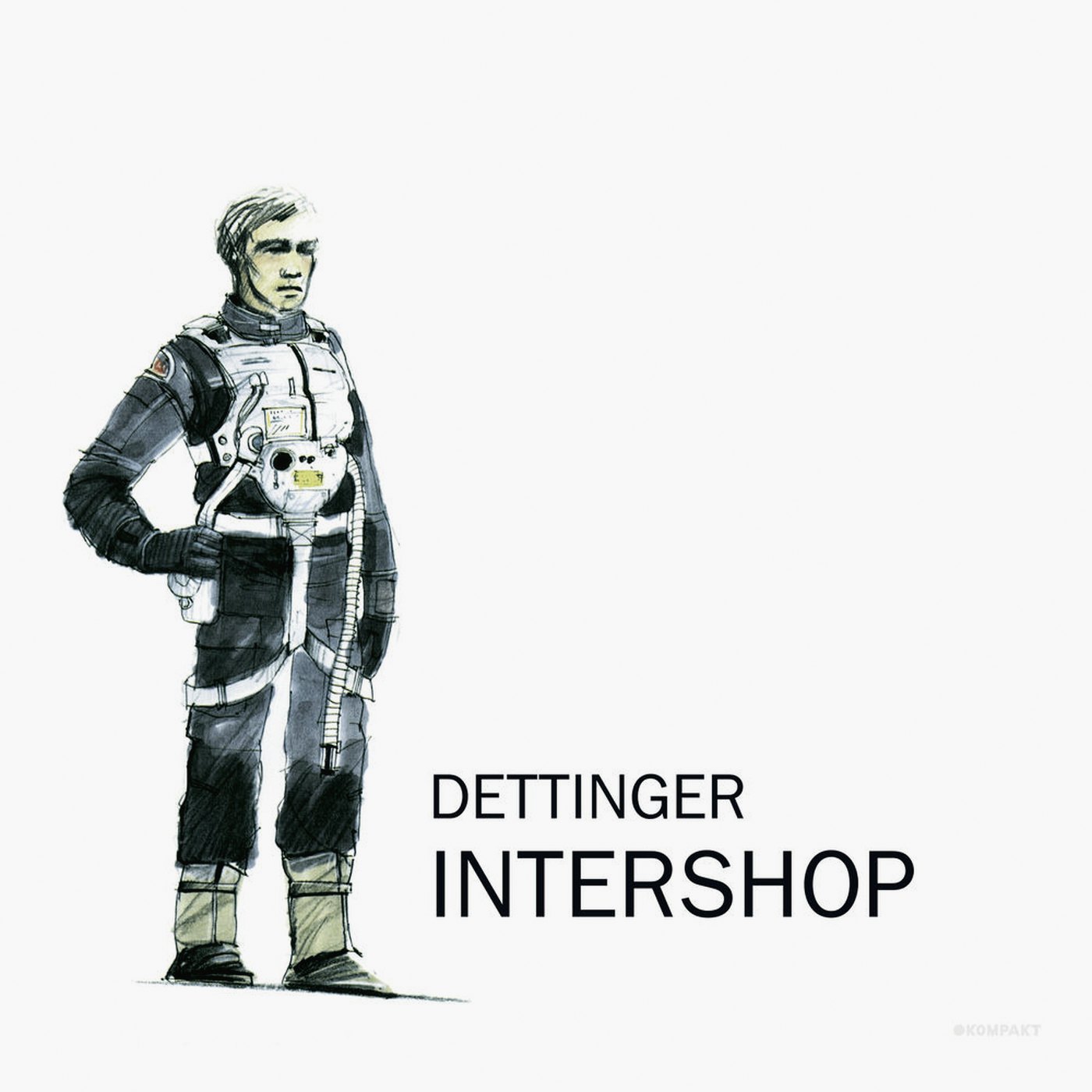
Kompakt's second CD release was also its first album credited to a single artist, and for sixteen years it only existed as one. Intershop, Olaf Dettinger's 1999 debut, arrived as Kompakt CD 002 on a label that didn't have a name yet for what it was doing. Vinyl didn't happen until 2015, and when it did, it was a Record Store Day pressing capped at 600 copies. We didn't get a copy of that one either. Most people who wanted this on wax in 2015 didn't, and a reissue landing at all, with no queue attached to it, is more luck than this record usually gets. The edition that landed April 26, remastered by Jörg Burger under catalogue KOMPAKT 478, isn't rationed to a single morning outside a record shop. Intershop set pop ambient's template in 1999. This is the first time actually owning it on vinyl hasn't meant beating that queue.
Dettinger showed up with one single behind him, "Blond," in 1998. Intershop followed a year later as Kompakt's first LP built around a single artist instead of a various-artists compilation, and it beat the label's own Pop Ambient series, which Wolfgang Voigt started compiling in 2001, by two full years. Order matters here: the genre didn't produce this record. This record, and a handful like it, produced the genre. Dettinger kept working after it, with the Puma and Totentanz singles and then a second album, Oasis, in 2000, plus remix work for Pet Shop Boys and fellow Kompakt artist Jürgen Paape. None of it took him any closer to a dancefloor.
He's never really given interviews, and there's no verified account carrying his name anywhere today. For a producer working in 1999 that's unremarkable. For one Kompakt is still actively reissuing in 2024, it's a choice, and it suits a record that doesn't explain itself either. No press then, none now, and no sign he's ever wanted either. The closest thing to a career move on record is a label deciding, twenty-five years later, that the work still stands without him saying anything about it.
Seven tracks, all called Intershop, numbered one through seven, running 43:43 total. No song titles past the sequence number, which tells you what kind of record this is before you've heard a note. Track six's the long one, 9:40, and it's the record's centre of gravity. Track four's the shortest, four minutes flat, sitting almost like a hinge between the two longer stretches on either side of it. There's no dancefloor pulse anywhere in it. It's tone first: hiss worked into the mix, not scrubbed out of it, bass dropped in like ballast, never locked to a grid, and small mechanical noise (clicks, knocks, the sound of something settling) left in. Nothing here got tidied away. It doesn't play like seven tracks so much as one long room, walked through at different speeds.
What this remaster buys the record is presence. Burger's no stranger to this catalogue — he's been putting out records on Kompakt himself, as Triola, for about as long as Dettinger has. What he's done here is give the low end somewhere to sit that the original 1999 master never had room for. The hiss stays. It was always the point — texture, not noise floor. What's changed is how far down the tones reach before they stop being felt, and on a record built almost entirely from air and hold, that's the whole difference between hearing it and standing inside it.
This was never a club record and it isn't pretending to be one now. Nobody's cueing a single Intershop track between two techno records. The point is the 43 minutes, played through, with nothing after it that asks for energy. It's a 3am record, or a headphones-on-the-last-train record, and it falls apart the second you drop it into a room that wants a beat. That's not a knock. Kompakt spent the two decades after signing Dettinger building its name on the dancefloor end of minimal techno, and it's easy to forget the label's very first artist album pointed the other way entirely: inward, unhurried, in no rush to get anywhere. Twenty-five years and two pressings later, it still isn't. Throw it on headphones and miss your stop. End up in Rockaway Park. Hell yeah. You'll find your way home when you wake up.
Hear it on Spotify.